
Anxiety
Anxiety vs. Stress: What's the Difference and When Should You Seek Help?
6 min read
Ambreen Rashid Khan
Clinical Psychologist
Introduction
We all experience stress and anxiety from time to time. In everyday conversations, we often use these words to mean the same thing. While they can feel very similar, stress and anxiety aren't quite the same.
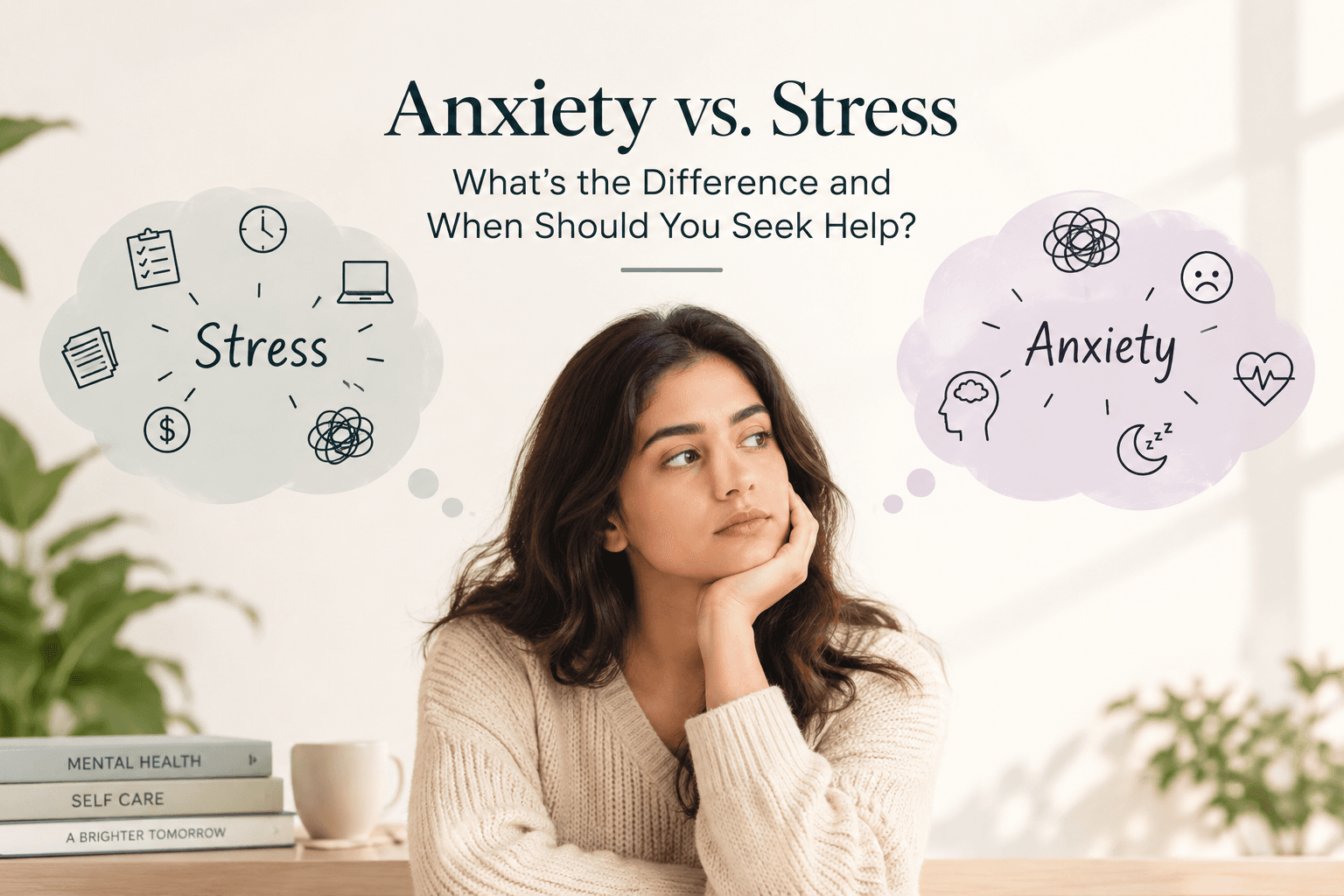
Stress is usually connected to a specific situation or challenge, such as a difficult deadline, financial pressure, or a major life change. Anxiety, on the other hand, can sometimes continue even when there isn't an obvious problem or immediate threat.
Knowing the difference can help you better understand what you're experiencing and recognize when it might be helpful to seek professional support.
What Is Stress?
Stress is your body's natural response to pressure, demands, or challenging situations.
You might feel stressed because of:
- Work deadlines
- Academic pressure
- Financial concerns
- Family responsibilities
- Relationship difficulties
- Major life changes
- Health concerns
A certain amount of stress can be useful. For example, feeling some pressure before an important deadline may motivate you to focus and get things done.
The problem is that stress can become difficult to manage when it is intense, happens frequently, or continues for a long time. When that happens, it can begin to affect your mood, sleep, relationships, and overall well-being.
What Is Anxiety?
Anxiety is more closely associated with feelings of worry, fear, or apprehension about what might happen.
Feeling anxious occasionally is a normal part of life. Most people experience some anxiety before an important event, during uncertainty, or when facing something unfamiliar.
However, anxiety can become a concern when the worry is persistent, difficult to control, or starts interfering with everyday life.
Anxiety can affect people in different ways. It may show up through thoughts and emotions, but it can also cause physical symptoms or changes in behavior.
Common Symptoms of Anxiety
Everyone experiences anxiety differently. Some common symptoms include:
- Excessive or persistent worry
- Feeling restless or constantly on edge
- Difficulty concentrating
- Trouble sleeping
- Irritability
- Rapid heartbeat
- Muscle tension
- Avoiding certain situations
- A strong feeling that something bad might happen
You don't necessarily need to experience all of these symptoms to be struggling with anxiety.
Anxiety vs. Stress: What's the Difference?
One simple way to understand the difference is to look at the source and duration of what you're experiencing.
Stress often has a clear and identifiable trigger.
For example:
"I'm stressed because I have an important deadline coming up."
Once the deadline has passed or the stressful situation improves, the feeling of stress may also begin to settle.
Anxiety can be different. Sometimes the worry continues even after the stressful situation is over.
For example:
"The deadline is over, but I still can't stop worrying that something will go wrong."
Of course, this doesn't mean that ongoing worry automatically means you have an anxiety disorder. A qualified mental health professional can help determine what may be contributing to your symptoms and whether treatment could be helpful.
When Should You Seek Help?
You don't have to wait until anxiety becomes overwhelming before asking for help.
Consider speaking with a psychologist if your worry or anxiety:
- Feels difficult to control
- Regularly affects your sleep
- Is affecting your relationships
- Makes work or studying more difficult
- Causes you to avoid people, places, or situations
- Has been continuing for a long time
- Causes significant emotional distress
Talking to a professional can give you a safe space to understand what you're experiencing. You don't have to simply "push through" difficult emotions on your own.
How Can Therapy Help?
Therapy can help you better understand the connection between your thoughts, emotions, and behaviors.
Depending on your individual needs, therapy may help you:
- Develop healthier ways of coping with stress
- Recognize patterns that contribute to anxiety
- Identify and challenge unhelpful thought patterns
- Learn techniques for managing difficult emotions
- Gradually work through situations you may be avoiding
Approaches such as cognitive behavioral therapy (CBT) are commonly used to help people manage anxiety disorders. The right approach depends on the person's symptoms, needs, and circumstances.
Practical Ways to Support Your Well-Being
Taking care of yourself won't always be enough to address severe or persistent anxiety, but healthy daily habits can support your overall emotional well-being.
You might try:
- Keeping a regular sleep schedule
- Staying physically active
- Spending time with people you trust
- Taking regular breaks from phones and social media
- Practicing relaxation, breathing, or mindfulness exercises
- Breaking large or stressful tasks into smaller steps
- Paying attention to situations or patterns that tend to increase your anxiety
Small changes can sometimes make stressful periods feel more manageable.
Frequently Asked Questions
Is stress the same as anxiety?
No. Stress and anxiety can feel similar and often overlap, but they aren't exactly the same. Stress is usually linked to a specific challenge or situation, while anxiety can continue even when there is no clear or immediate source of stress.
Can stress cause anxiety?
Long periods of intense or unmanaged stress can contribute to emotional difficulties and may make anxiety symptoms more noticeable. However, experiencing stress does not automatically mean that someone has an anxiety disorder. A professional assessment can help clarify what is happening.
Can therapy help with anxiety?
Yes. Psychotherapy is an established treatment option for anxiety disorders. The type of therapy that may be helpful depends on the person's symptoms, circumstances, and individual needs.
Final Thoughts
Feeling stressed or anxious doesn't mean that something is wrong with you. These are experiences that most people encounter at different points in life.
What matters is how often these feelings occur, how intense they become, and whether they are starting to interfere with your everyday life.
If anxiety or ongoing worry is making it difficult to sleep, work, study, maintain relationships, or enjoy your daily life, talking with a qualified psychologist may be a helpful next step.
Ambreen Rashid Khan provides individual and online psychological support for people experiencing anxiety and other emotional challenges.
Need support?
Book a Session